
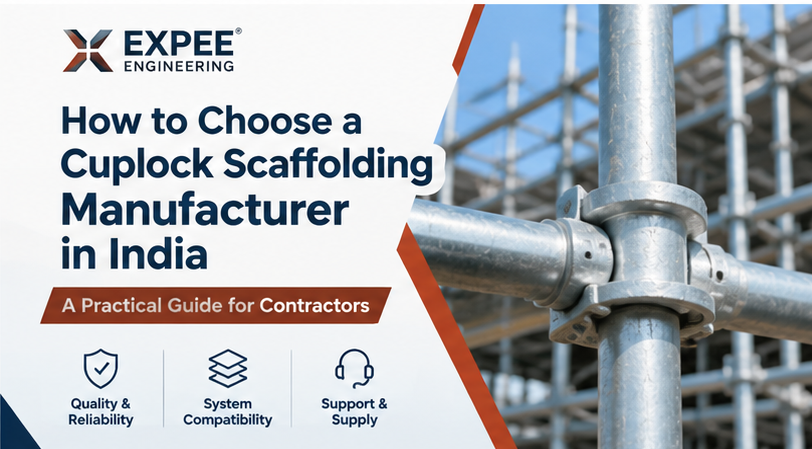
A considered supplier evaluation helps contractors source compatible components and plan scaffolding requirements with greater confidence.
Choosing a cuplock scaffolding manufacturer is an important procurement decision for construction companies, infrastructure contractors, formwork specialists and industrial maintenance teams. The supplier you select can influence component consistency, delivery coordination, product support and the ease with which equipment can be integrated into a project. A competitive quotation matters, but it should not be the only factor in the decision.
Cuplock scaffolding is a modular system in which vertical standards connect with horizontal members through cup-and-blade locking connections. Because the system is assembled from components that work together, buyers should evaluate the complete product range rather than judging a supplier from one item or a headline price. This guide explains practical questions to ask before shortlisting a manufacturer in India.
Discuss Your Scaffolding Requirements with EXPEE
Connect with EXPEE Engineering to discuss your product requirements and explore relevant scaffolding and formwork components for your project.
1. Understand the requirements of your project first
Before contacting manufacturers, define the intended application. Scaffolding used to provide temporary access around a building may have different configuration needs from a temporary support arrangement for formwork. Record the project location, approximate scope, expected programme, site access limitations and the type of work for which the system is being considered. If a design or bill of quantities is available, use it as the starting point for supplier discussions.
Do not estimate structural requirements from a general online article. Bay dimensions, working lifts, loads, ties, bracing, foundations and other design decisions must be established by competent project personnel using the relevant design information and applicable requirements. A manufacturer can clarify its product range, but the project design should determine what is suitable for the site.
2. Review the range of cuplock components
A cuplock system commonly includes vertical standards, ledgers, transoms and diagonal bracing, together with base components, platforms and application-specific accessories. Confirm which components the manufacturer supplies and whether the required sizes and connection details are available as a coordinated system. Ask for a product list that identifies each component clearly so that the procurement team can compare like with like.
Check that the quotation distinguishes between standard components and optional accessories. A low initial price may not represent the complete requirement if essential items are excluded. Ask the supplier to explain any assumptions, exclusions or substitutions before placing an order.
3. Ask how product quality is controlled
Request information about the manufacturer’s quality-control process. Useful questions include how incoming material is checked, how dimensions and fit are monitored during production, how finished components are inspected and how non-conforming products are handled. Where relevant, request available inspection records, product specifications and supporting documentation for the particular items being quoted.
Inspect representative components when practical. Look for visible damage, distortion, inconsistent workmanship, corrosion, poorly finished edges or connection features that do not engage as intended. Visual checks are only one part of evaluation; they do not replace technical verification, material testing or an independent inspection where the project requires one.
4. Confirm compatibility across the system
Compatibility is essential when components are sourced for an existing inventory or when equipment from more than one supplier may be used. Ask the manufacturer to identify the system and connection arrangement to which its products belong. Do not assume that components described with the same generic name are automatically interchangeable. Differences in dimensions, connection details or product design may affect assembly and the suitability of a combined arrangement.
If the project will use existing equipment, share the relevant drawings, measurements or product information with the supplier and obtain a clear response before ordering. Keep written records of any compatibility confirmation and have the final arrangement reviewed by the responsible competent person.
5. Evaluate manufacturing and supply capability
Ask how the manufacturer plans to fulfil the quantity and delivery schedule required for your project. Discuss production lead times, stock availability, dispatch arrangements, packaging, transport responsibilities and how shortages or damaged deliveries are reported. For a phased project, confirm whether deliveries can be coordinated with the site programme and whether repeat orders can be handled consistently.
Ask for a written quotation that includes product descriptions, quantities, unit rates, taxes, freight assumptions, delivery location, validity period and payment terms. A clear quotation makes comparisons more reliable and reduces the risk of misunderstandings after the purchase order is issued.
6. Consider experience and application knowledge
A supplier should be able to understand the intended application and explain its product range in clear terms. Ask whether the team can help identify the components listed in your requirement, clarify product terminology and provide the available technical information. Relevant experience may be useful, but broad claims should be supported by details that relate to the products and services being considered.
Ask for examples of similar product supply or project applications where the manufacturer is permitted to share them. Treat case studies as context rather than proof that a proposed arrangement is suitable for your own site. Each project has its own design, loading, access and environmental conditions.
7. Check documentation and traceability
Before confirming an order, establish what documentation will accompany the supply. Depending on the product and project requirements, this may include a detailed quotation, product descriptions, available drawings, inspection information, dispatch records and invoices. Agree how product batches or supplied quantities will be identified and how any quality concern will be raised.
Keep procurement records together with the project documentation. Clear records help the site team check deliveries against the order, identify missing items and communicate accurately with the supplier if a component needs review or replacement.
8. Compare the total value, not only the unit price
When comparing manufacturers, evaluate the complete cost of obtaining the required system. Consider component coverage, delivery, packaging, handling, replacement arrangements, documentation and the level of support offered. A quotation that appears less expensive may exclude items that another supplier has included. Ask each shortlisted manufacturer to quote against the same bill of quantities and delivery assumptions.
Do not accept unsupported claims about load capacity, service life or compliance as a substitute for product-specific evidence. If a project has defined technical or regulatory requirements, ask for the documents needed by the project team to verify them.
9. Assess communication and after-sales support
Good communication is especially important when construction schedules change or a delivery needs clarification. Before ordering, identify the person responsible for quotations, order updates and technical product queries. Ask how the manufacturer handles shortages, transit damage, returns and warranty questions, and make sure the agreed process is recorded.
Consider whether the supplier responds clearly and consistently during the quotation stage. A transparent response to questions about product details, lead times and exclusions is more useful than a broad promise that cannot be checked.
10. Use a consistent supplier evaluation checklist
- Does the quotation cover the complete component list?
- Are product descriptions and dimensions clearly identified?
- Has compatibility with existing equipment been checked where necessary?
- Can the supplier provide the documentation required by the project?
- Are manufacturing, stock and delivery timelines stated?
- Are freight, taxes, payment terms and exclusions clear?
- Is there a defined process for quality concerns and after-sales support?
- Has the proposed system been reviewed by the appropriate project personnel?
Use the same checklist for every shortlisted supplier. This creates a fair comparison and helps the procurement team explain why a manufacturer was selected.
Why discuss your requirement with EXPEE Engineering?
EXPEE Engineering supplies scaffolding and formwork materials for construction requirements. If you are reviewing cuplock scaffolding components, share your item list, quantities, delivery location and intended application with the team. This helps the enquiry focus on the products required and the information needed to prepare a relevant quotation.
Conclusion
Selecting a cuplock scaffolding manufacturer in India requires more than comparing prices. A structured evaluation of component coverage, quality processes, compatibility, documentation, supply planning and communication helps contractors make a more informed procurement decision. Define the project requirement first, compare suppliers on the same basis and ensure the proposed equipment is checked against the approved project design before use.
Need Cuplock Scaffolding for Your Construction Project?
Contact EXPEE Engineering to discuss your product requirements, quantities and availability.
Frequently Asked Questions (FAQs)
What should I check before choosing a cuplock scaffolding manufacturer?
Review the product range, component descriptions, compatibility, quality-control information, documentation, delivery capability, quotation details and after-sales process. Confirm technical suitability through the project design and competent personnel.
Which components are commonly included in a cuplock scaffolding system?
Common components include standards, ledgers, transoms and diagonal braces. Base components, platforms, access equipment and other accessories may also be required depending on the application and design.
Can cuplock components from different manufacturers be mixed?
Do not assume they are interchangeable. Confirm the connection details and dimensions with the relevant manufacturers and obtain approval from the competent person responsible for the scaffold design before combining components.
Should I select a manufacturer only by price?
No. Compare the complete bill of quantities, product information, documentation, delivery, exclusions and support. The lowest unit rate may not represent the best overall value for the project.
What information should I share when requesting a quotation?
Share the component list, quantities, intended application, project location, required delivery schedule and any relevant drawings or specifications. Avoid relying on estimates where an approved design or bill of quantities is required.