
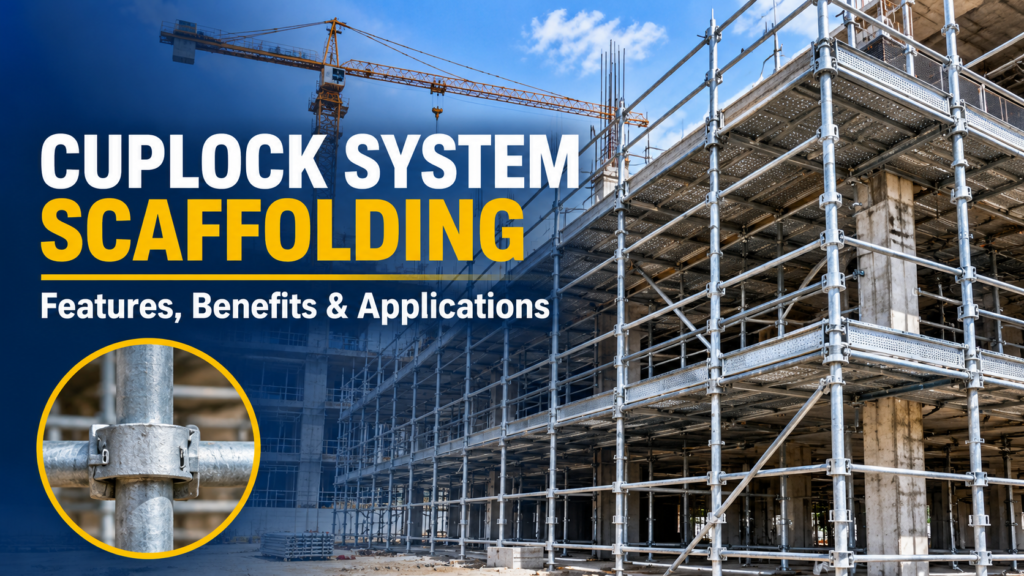
1. Introduction:
Scaffolding is an important part of construction today, helping workers on heights gain temporary access and support. Whether for a home, commercial development, bridge, industrial facility, or infrastructure project, a good scaffolding system allows construction teams to work efficiently with proper safety measures.
Cuplock System Scaffolding is a type of scaffolding that is known for its modular construction, fast connection system, and versatility. It has a unique cup and blade connection system for connecting vertical and horizontal members into a structured design capable of accommodating different construction requirements.
It is suitable for both large and small contractors and varying degrees of project complexity. In developing construction markets such as Hyderabad, knowledge of the components, applications, and benefits of this scaffolding system will enable businesses to get a good deal during gear procurement efforts.
This guide will teach the operating mode of cuplock scaffolding, its basics, general applications, and why cuplock scaffolding is the key to an efficient and safe construction operation.
Looking for Cuplock System Scaffolding?
Connect with EXPEE to discuss your scaffolding requirements and explore suitable solutions for your construction project.
1. What Is Cuplock Scaffolding?
It is a modular steel scaffold that uses a unique locking mechanism to lock horizontal ledgers to vertical standards.
The system usually comprises vertical tubes with fixed lower cups at regular intervals. These cups interlock with horizontal members having bladelike ends. A movable cup above holds the cup at the connection points, locking several parts at each joint in place.
The design reduces the need to use several individual fittings and helps workers to erect and dismantle the structure more quickly and safely.
Cuplock system scaffolding is commonly used in the following:
- Construction of residential and commercial buildings.
- Supports for concrete slab and beam formwork.
- Overpass bridge projects.
- Industrial and infrastructure upkeep.
- Red access platforms.
- Heavy construction and renovation.
Depending on the needs of the various projects, the contractors can scale the scaffolding design to small or large sizes.
2. Main components of the cuplock scaffolding system
It is important to know the major components when selecting scaffolding equipment and designing a construction project. Each component is an essential part of the larger scaffolding equipment on the construction site.
Vertical standards.
Vertical standards are vertical member frames of scaffolding. Vertical standards are constructed with cup connections at regular intervals to accommodate the attachment of horizontal ledgers and other compatible components.
Vertical standards transfer loads within the scaffolding structure to its base.
Ledgers horizontally
Ledgers are horizontal connections that connect and lock the vertical standards together. Their ends are bladed to nest and lock into the cup connections when appropriately fitted.
Rotating Bars
Transoms: Horizontal elements of the scaffold frame. These support the working platforms and transfer loads depending on the design of the system.
Jacks, base
Adjustable jacks are bolted to the bottom of standard uprights to compensate for surface unevenness and to level the entire scaffold on suitable supporting ground.
Diagonal braces:
Diagonal Bracing provides lateral support to the frame. They should be installed according to the approved scaffolding design and installation specifications.
Work platforms and their accessories.
Compatible accessories like guardrails, ladders, and toe boards facilitate safe access and working arrangements. Steel platforms
Selecting compatible components is essential for maintaining the intended structural performance of the complete scaffolding system.
3. Characteristics of Cuplock System Scaffolding
Cuplock scaffolding comes with several useful features that fit into a number of construction environments.
Modular Connection System
The cup and blade system allows horizontal members to be connected to vertical standards at predetermined locations. The system is easier to connect and has limited loose fittings.
Simple to put together and take apart:
The lock makes it easy to assemble and dismantle. This can save time for construction crews when they are moving scaffolding from one job site to another.
Flexible Work Choices
The design’s modularity allows contractors to form different shapes and sizes of scaffolding configurations based on the height and size of the building and the needs of the project.
Several Connection Points
It allows multiple compatible horizontal members at a single connection point for alternate configurations.
Component Reusability:
They can qualify by inspecting the working condition of scaffolding components in case there are remaining good-quality scaffolding components in other projects instead of purchasing new components.
Flexibility
It can be used for different construction and access purposes according to engineering and approved loading requirements.
Therefore, the Cuplock Scaffolding System is an excellent choice for contractors who are seeking organized and modular scaffolding systems.
4. Advantages of Cuplock Scaffolding
The appropriate type of scaffolding (e.g., Cuplock scaffolding) can help with material control, productivity, and safety at the job site.
Increased construction productivity.
Components can be assembled easily using the commonized connection method, which may reduce the time required to erect scaffolding. This allows the construction teams to plan the work sites better.
A Reduction in Fittings Needed
Integral Cup Connection: This design may eliminate the need for multiple couplers at the main ledger, ensuring compliance with standards. Easier component handling and inventory management.
Better Structural Organization
Modular Design: It helps to have a standard structure with vertical and horizontal members, and the design is easily standardized.
Economical Movement
You will save money in the long term by not having to spend on new equipment, as durable parts can be reused for other projects with proper maintenance and inspection.
Flexibility for Various Projects
It can also be adapted to various construction projects; thus, it can be utilized by contractors in residential, commercial, and infrastructure construction.
Simplified Material Handling
Scaffolding material of a standard type allows construction teams to organize, transport, store, and manage scaffolding easily.
5. Cuplock Scaffolding Applications in Construction
Cuplock scaffolding has versatile applications in construction and industry.
Construction of Buildings
Cuplock systems are employed for temporary masonry, plastering, painting, exterior finishing, and other high-rise construction access.
Concrete Formwork Support System
Cuplock systems can be used as temporary support for slabs, beams, and other concrete formwork applications with appropriate structural design and load calculations.
Flyovers and bridges
The use of modular scaffolding and supports requires plant contractors to design and fabricate additions to solve the custom engineering problems of an overhead project.
Uses of scaffolding in industry.
In factories, warehouses, and industrial facilities, scaffolding systems are utilized to provide temporary access for maintenance, inspection, painting, and repair work.
Construction for Commercial Purposes
Large commercial development can necessitate flexible access to numerous work areas. Modular scaffolding can help contractors meet these access needs.
The right scaffolding materials can effectively support various types of residential, commercial, and infrastructure development projects in Hyderabad.
6. Cuplock scaffolding safety
While scaffolding systems provide temporary access and support, scaffolding is only safe when it is designed, installed, inspected, and maintained properly.
Essential Safety Practices for Builders:
- Correct Base: Build scaffolding on firm, suitable, and properly prepared surfaces.
- Proper Construction: Construct components according to the manufacturer’s guidelines and design approved for use.
- Load Control: Keep within specified limits and prevent working platforms from exceeding capacity.
- Bracing: Brace and tie the structure properly.
- Safety Platforms: Install appropriate platforms, guardrails, and toe boards as required.
- Frequent Checks: Inspect for corrosion, distortion, cracks, defective welds, bad connections, etc.
- Proper Supervision: Erection, alteration, and dismantling should be done by trained and competent persons.
Use scaffolding suitable to Indian requirements, referring to IS 4014 as applicable.
It should be appreciated that no scaffolding system is inherently safe. Safe work requires correct engineering, correct installation, and continuous on-site oversight.
7. Selection of Good Cuplock Scaffolding in Hyderabad
Part of the process of purchasing construction equipment is choosing a good supplier. Before placing an order, contractors should evaluate the product specifications and supplier capabilities.
They should search for:
- Material Quality: Check for steel grade, material specifications, and quality certifications.
- Manufacturing Precision: Verify standards, ledgers, cups, and blades for connection and dimensional accuracy.
- Welding & Finishes: Check welds, finishes, and protective coatings.
- Testing of Products: Confirm permanent inspection reports and related technical documentation.
- Component Compatibility: Verify that all components are compatible with the proposed scaffolding system.
- Availability: Consider product availability, minimum order quantities, delivery times, and shipping arrangements.
- Technical Support: Identify suppliers that can provide product information and guidance on appropriate applications.
These checks will help you find fairly ideal scaffolding products as per the different needs of construction companies in Hyderabad.
8. EXPEE Cuplock Scaffolding Solutions.
The right scaffolding equipment can make all the difference in organized and efficient construction work. EXPEE provides cuplock scaffolding in Hyderabad for commercial needs.
Contractors may contact EXPEE for product details and browse through their collection of scaffolding products to ensure the product required for their construction is available.
Buyers should inquire about material specifications, sizes of each part used in configuration for scaffolding, quality assurance documentation, coatings for protection, and compatibility with construction needs before purchasing.
Proper selection of scaffolding components and methods can improve the design of buildings, whether they be residential, commercial, or infrastructural.
You can refer to the Hyd page to learn more about EXPEE quality cuplock scaffolding.
Conclusion
Cuplock scaffolding is a practical, versatile modular system that’s suitable for residential, commercial, infrastructure, and industrial applications. Its cupped-and-blade jointing, adjustable design, and interchangeable parts provide a practical solution for contractors working on different construction needs.
Awareness of its parts, capabilities, and applications enables the company to make sound choices when choosing equipment. Periodic inspections should be made to adhere to the product quality and structural design for safe working conditions.
Choosing the right Cuplock System Scaffolding products and the reputed name of tower scaffold suppliers can help the construction companies in Hyderabad city to plan projects and manage material for growing safely. EXPEE is a good option to consider if you are looking for cuplock scaffolding solutions for your construction needs.
Need Cuplock Scaffolding for Your Construction Project?
Contact EXPEE to learn more about cuplock scaffolding solutions and discuss your project requirements with the team.
Frequently Asked Questions (FAQs)
1. What is the cuplock scaffolding system?
Cuplock scaffolding is a type of modular steel scaffolding system with a cup and blade fitting used for locking vertical standards to the horizontal ledgers. It is widely used in construction, formwork, infrastructure, and industrial maintenance.
2. What makes up a cuplock scaffolding system?
The core components include vertical standards, horizontal ledgers, transoms, base jacks, bracers, working platforms, and safety accessories such as guard rails and toe boards.
3. What are the main advantages of cuplock scaffolding?
Its modular design, quick connection, flexible configurations, fewer loose fittings, reuse of the components, and versatility for various construction applications.
4. What are the common applications for cuplock scaffolding?
Cuplock scaffolding is used in residential and commercial construction, bridge projects, industrial plant maintenance, concrete formwork support, infrastructure projects, and elevated access.
5. Cuplock scaffolding and safety in construction
Standardized connections help to create an organized scaffolding structure. But safety also relies on good structure and design, good foundation strength, careful assembly, proper bracing, load distribution, and inspection.
6. What do I need to check before purchasing cuplock scaffolding in Hyderabad?
Steel quality, dimensions of components, welding, protective coating, tests, compatibility of components, reliability of supply, and delivery. Always ask for technical specifications and quality documentation before buying.